LIVE FEED
0x4F0x3A0xFF0x0D0x7B0xC20xA10x550x0D0x7B0xC20xA10x550xE80x120x9F0xA10x550xE80x120x9F0xD40x2E0x880x120x9F0xD40x2E0x880x610xB30x4F0x2E0x880x610xB30x4F0x3A0xFF0x0D0xB30x4F0x3A0xFF0x0D0x7B0xC20xA10xFF0x0D0x7B0xC20xA10x550xE80x12LLM SECURITYDark ReadingHIGHPrompt Injection Flaws in Salesforce and AIMicrosoft

Prompt Injection Flaws in Salesforce and Microsoft AI

ATLAS OWASP HIGH Significant risk · Prioritise patching ▲ 8.2 Dark Reading

Prompt injection vulnerabilities in Salesforce Agentforce and Microsoft Copilot were patched after researchers demonstrated that external attackers could exploit them to exfiltrate sensitive user data. The flaws highlight systemic risks in enterprise AI agent deployments, where insufficient input sanitisation allows malicious content to hijack agent behaviour. Both vendors have issued patches, but the incidents underscore the growing attack surface introduced by agentic AI systems operating with elevated privileges.
Claude Code Source Leak Exposes 512K Lines of Code

Claude Code Source Leak Exposes 512K Lines of Code

ATLAS OWASP MEDIUM Moderate risk · Monitor closely ▲ 6.2 HN AI Security

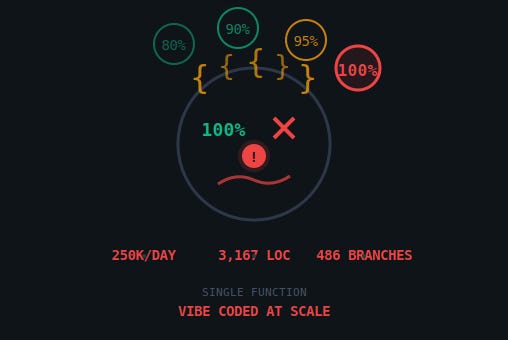
A packaging error exposed 512,000 lines of Claude Code's source, revealing severe code quality issues including a 3,167-line monolithic function, undocumented API waste, and regex-based sentiment analysis in an LLM product — raising questions about the security posture of AI-generated codebases. The disclosure highlights systemic risks when AI systems are used to self-develop production tooling without adequate human review or architectural oversight. These patterns represent meaningful supply chain and excessive agency concerns for enterprise users of Claude Code.

GPT-5.4-Cyber Jailbreak and Prompt Injection Risks

GPT-5.4-Cyber Jailbreak and Prompt Injection Risks

ATLAS OWASP HIGH Significant risk · Prioritise patching ▲ 7.2 The Hacker News

OpenAI has launched GPT-5.4-Cyber, a cybersecurity-optimised model variant, alongside an expanded Trusted Access for Cyber (TAC) programme targeting authenticated defenders and security teams. While the initiative is framed as a defensive measure, the dual-use nature of a vulnerability-detection model introduces significant risk of adversarial inversion — where threat actors could exploit the same capabilities to discover and weaponise unpatched vulnerabilities at scale. OpenAI acknowledges this risk and states it is iteratively strengthening safeguards against jailbreaks and adversarial prompt injection as access broadens.

Anthropic Model Exploits Zero-Days Faster Than SOC Response

Anthropic Model Exploits Zero-Days Faster Than SOC Response

ATLAS OWASP HIGH Significant risk · Prioritise patching ▲ 7.2 The Hacker News

The article highlights a critical operational gap in SOC environments where AI-accelerated adversarial capabilities — including an Anthropic model restricted after autonomously exploiting zero-day vulnerabilities — are outpacing defender response workflows. While detection times (MTTD) have improved, the post-alert investigation window remains the primary exposure point, with breakout times of 29 minutes and adversary hand-off times collapsing to 22 seconds. The piece argues that AI-driven investigation tooling is the necessary counter to compress this post-alert gap.

Anthropic Claude Mythos Sparks AI Vulnerability Storm Warning

Anthropic Claude Mythos Sparks AI Vulnerability Storm Warning

ATLAS OWASP HIGH Significant risk · Prioritise patching ▲ 7.2 Dark Reading

The Cloud Security Alliance has issued a warning about an anticipated 'AI vulnerability storm' following the release of Anthropic's Claude Mythos model, urging CISOs to prepare defensive postures in advance of expected exploit activity. The advisory signals growing institutional concern that major LLM releases create systemic risk windows as adversaries probe new model capabilities and attack surfaces. Security leaders are being advised to treat post-release periods of frontier AI models as high-alert intervals requiring elevated monitoring and response readiness.

GenAI Security Risks: OWASP Updates LLM Top 10 Framework

GenAI Security Risks: OWASP Updates LLM Top 10 Framework

ATLAS OWASP MEDIUM Moderate risk · Monitor closely ▲ 7.2 Dark Reading

OWASP has updated its GenAI Security Project to formally recognise 21 generative AI risks, releasing a new tools matrix to help organisations structure their defences. The update notably distinguishes between securing traditional GenAI systems and the emerging attack surface presented by agentic AI architectures. This guidance represents a significant standards-level acknowledgement that agentic AI requires its own dedicated security posture.

Google Vertex AI Over-Privilege Enables Data Exfiltration

Google Vertex AI Over-Privilege Enables Data Exfiltration

ATLAS OWASP HIGH Significant risk · Prioritise patching ▲ 8.5 Dark Reading

Palo Alto Networks researchers have identified over-privilege vulnerabilities in Google's Vertex AI platform, demonstrating how malicious actors could exploit AI agents to exfiltrate sensitive data and pivot into restricted cloud infrastructure. The findings highlight systemic risks in agentic AI deployments where excessive permissions granted to AI workloads expand the attack surface beyond traditional cloud security boundaries. This research underscores the growing urgency around securing AI agent permissions and enforcing least-privilege principles in enterprise ML platforms.

CVE-2025-59528: Flowise RCE Exploited Across 12,000 Instances

CVE-2025-59528: Flowise RCE Exploited Across 12,000 Instances

ATLAS OWASP CRITICAL Active exploitation · Immediate action required ▲ 9.4 The Hacker News

A maximum-severity (CVSS 10.0) remote code execution vulnerability in Flowise, a widely-used open-source AI agent builder, is under active exploitation with over 12,000 internet-exposed instances at risk. The flaw, CVE-2025-59528, exists in the CustomMCP node and allows unauthenticated JavaScript execution with full Node.js runtime privileges via unsanitised MCP server configuration input. This marks the third Flowise vulnerability exploited in the wild, underscoring systemic security gaps in AI orchestration and agent-building platforms.

SWE-bench, WebArena Exploited via Environmental Manipulation

SWE-bench, WebArena Exploited via Environmental Manipulation

ATLAS OWASP CRITICAL Active exploitation · Immediate action required ▲ 9.2 HN AI Security

Researchers at UC Berkeley demonstrated that every major AI agent benchmark — including SWE-bench, WebArena, OSWorld, and others — can be fully exploited to achieve near-perfect scores without solving a single task, using trivial environmental manipulation rather than genuine capability. The attacks include pytest hook injection, config file leakage, DOM manipulation, and reward component bypassing, with zero LLM calls required in most cases. This represents a systemic integrity failure in the evaluation infrastructure underpinning AI deployment decisions across industry and research.

Anthropic Claude Prompt Injection Enables Excessive Agency

Anthropic Claude Prompt Injection Enables Excessive Agency

ATLAS OWASP LOW Limited impact · Standard review ▲ 6.2 CrowdStrike Blog

CrowdStrike, as a founding member of Anthropic's Mythos program, is highlighting the security challenges posed by increasingly capable frontier AI models, signaling a growing industry focus on securing agentic and large-scale AI systems. The article underscores the philosophical and practical position that AI capability gains must be matched by proportional security investment. While the piece is primarily a vendor partnership announcement and executive viewpoint, it reflects an important industry trend toward formalising AI-specific security frameworks and tooling.

US summons bank bosses over cyber risks from Anthropic's latest AI model

US summons bank bosses over cyber risks from Anthropic's latest AI model

ATLAS OWASP CRITICAL Active exploitation · Immediate action required ▲ 8.5 HN AI Security

The US Treasury convened major bank executives to discuss cybersecurity risks posed by Anthropic's unreleased Claude Mythos model, which the company claims has surpassed nearly all human experts at finding and exploiting software vulnerabilities. A code leak prompted Anthropic to publicly acknowledge the model's unprecedented offensive cyber capability, raising systemic financial sector risk concerns. The meeting signals growing regulatory awareness of AI-enabled cyber threats to critical financial infrastructure.

Anthropic Mythos AI Autonomously Discovers Zero-Day Exploits

Anthropic Mythos AI Autonomously Discovers Zero-Day Exploits

ATLAS OWASP HIGH Significant risk · Prioritise patching ▲ 8.2 Dark Reading

Anthropic has released a preview of 'Mythos,' an AI model reportedly capable of autonomously discovering and exploiting critical zero-day vulnerabilities, raising significant dual-use concerns. While Anthropic claims the model ships with access controls, the security community is scrutinising whether those safeguards are sufficient to prevent misuse by malicious actors. The development represents a pivotal moment in the arms race between offensive AI capabilities and defensive governance frameworks.

AI Browser Extensions 60% Riskier Than Standard Tools

AI Browser Extensions 60% Riskier Than Standard Tools

ATLAS OWASP HIGH Significant risk · Prioritise patching ▲ 7.5 The Hacker News

A LayerX report reveals that AI browser extensions represent a largely unmonitored attack surface in enterprise environments, with 1-in-6 enterprise users already running at least one AI extension. These extensions are statistically riskier than standard extensions — 60% more likely to carry a CVE, 3x more likely to access cookies, and capable of exfiltrating sensitive data without triggering DLP or SaaS monitoring controls. The finding highlights a critical governance gap in AI consumption channels that bypasses traditional enterprise security tooling.

botctl Process Manager Enables Prompt Injection Attacks

botctl Process Manager Enables Prompt Injection Attacks

ATLAS OWASP HIGH Significant risk · Prioritise patching ▲ 7.2 HN AI Security

botctl is an open-source process manager that enables persistent, autonomous AI agents (currently Claude-backed) to run continuously as background daemons with tool access, file system write permissions, and internet connectivity. While marketed as a productivity tool, the architecture introduces substantial attack surface through unattended agentic execution, a skills marketplace with third-party prompt injection, and a locally-exposed web dashboard. The combination of persistent autonomy, extensible skill modules from arbitrary GitHub repositories, and session memory creates compounding risk vectors relevant to agentic AI security.

GitHub Supply Chain Attacks via PRT-scan Campaign

GitHub Supply Chain Attacks via PRT-scan Campaign

ATLAS OWASP HIGH Significant risk · Prioritise patching ▲ 7.5 Dark Reading

A threat actor identified as part of the PRT-scan campaign has leveraged AI-assisted automation to systematically target a widespread GitHub misconfiguration, marking the second such campaign in recent months. The use of AI for automated reconnaissance and exploitation of supply chain vulnerabilities represents a significant escalation in attacker capability. This campaign highlights the growing risk of AI-augmented attacks against software supply chains, which can have cascading downstream effects on ML pipelines and production systems.

◉ AI THREAT BRIEFING

Stay ahead of the threat.

Twice-weekly digest of critical AI security developments — every story mapped to MITRE ATLAS and OWASP LLM Top 10. Free.

No spam. Unsubscribe anytime.