LIVE FEED
Iroh Launches Mesh LLM for Distributed AI Across Peer Nodes

Iroh Launches Mesh LLM for Distributed AI Across Peer Nodes

FIRST LOOK ATLAS OWASP HIGH Significant risk · Prioritise patching ▲ 8.2 HN AI Security

Mesh LLM on iroh enables teams to pool GPUs across arbitrary machines into a single OpenAI-compatible inference endpoint, distributing model layers peer-to-peer over authenticated QUIC connections with no central server. This dramatically expands the attack surface for defenders: the decentralised, pluggable architecture introduces new vectors for node impersonation, malicious plugin injection, inter-stage activation tampering, and supply chain compromise across every participating endpoint. Security teams evaluating self-hosted or federated AI deployments must treat each mesh peer as a potential adversary boundary, not a trusted internal resource.

Anthropic Mythos Model Theft: China-Linked Access

Anthropic Mythos Model Theft: China-Linked Access

ATLAS OWASP CRITICAL Active exploitation · Immediate action required ▲ 8.5 The Verge AI

The White House reportedly believes a China-linked group accessed Anthropic's Mythos AI model, prompting export restrictions on the technology. If confirmed, the breach represents a significant national security threat, as adversaries could exploit the model directly or use knowledge distillation to replicate its capabilities. Separately, reports of jailbreak vulnerabilities in Mythos and Fable compound concerns about unauthorised access to frontier AI systems.

Qwen 3.5-397B Model Theft: Rio's LLM Exposed as Rebranded Clone

Qwen 3.5-397B Model Theft: Rio's LLM Exposed as Rebranded Clone

ATLAS OWASP HIGH Significant risk · Prioritise patching ▲ 7.8 HN AI Security

Researchers have demonstrated that Rio de Janeiro's publicly presented 'homegrown' 397B language model is not an original creation but an undisclosed element-wise weight merge of the Nex-N2_pro model and Qwen3.5-397B-A17B. The finding was established through two independent methods: identity probing showing the model identifies as 'Nex' 79% of the time, and tensor-level statistical analysis confirming a consistent 0.6/0.4 blend across all 60 layers. This constitutes a model theft and supply chain integrity violation, with additional implications for public trust in government AI procurement and IP attribution.

TeamPCP Steals Mistral AI Source Code via Supply Chain

TeamPCP Steals Mistral AI Source Code via Supply Chain

ATLAS OWASP HIGH Significant risk · Prioritise patching ▲ 8.5 BleepingComputer

The TeamPCP threat group has compromised Mistral AI's codebase management system via the Shai-Hulud software supply chain attack, stealing approximately 5GB of internal repositories covering training, fine-tuning, benchmarking, and inference pipelines. The hackers are demanding $25,000 for nearly 450 repositories or threatening to leak them publicly within a week. Mistral AI confirmed the breach but stated that core repositories, hosted services, managed user data, and research environments were not affected.

Anthropic Mythos Preview Breached via Contractor Credentials

Anthropic Mythos Preview Breached via Contractor Credentials

ATLAS OWASP HIGH Significant risk · Prioritise patching ▲ 8.2 Wired Security

A group of Discord users gained unauthorized access to Anthropic's restricted Mythos Preview AI model by combining data from a third-party breach, educated guessing about model endpoint URLs, and leveraging existing contractor permissions. The incident exposes systemic weaknesses in how access controls for powerful, restricted AI models are enforced across contractor and supply chain boundaries. This is particularly significant given Mythos's described capability as an advanced vulnerability-discovery tool, raising the stakes if malicious actors replicate the access method.

Model Extraction Attacks Surge: Google GTIG Q4 Report

Model Extraction Attacks Surge: Google GTIG Q4 Report

ATLAS OWASP HIGH Significant risk · Prioritise patching ▲ 8.5 Mandiant Blog

Google Threat Intelligence Group's Q4 2025 AI Threat Tracker documents a meaningful escalation in adversarial AI misuse, including a surge in model extraction (distillation) attacks, nation-state operationalisation of LLMs for phishing and reconnaissance, and the emergence of AI-integrated malware families such as HONESTCUE that leverage Gemini's API. While no breakthrough capabilities have been observed from APT actors, the integration of agentic AI for tooling development signals a maturing threat landscape. Defenders should prioritise monitoring for model extraction activity, API abuse, and AI-augmented social engineering campaigns.

Scanning for AI Models, (Tue, Apr 14th)

Scanning for AI Models, (Tue, Apr 14th)

ATLAS OWASP HIGH Significant risk · Prioritise patching ▲ 7.8 SANS Internet Storm Center

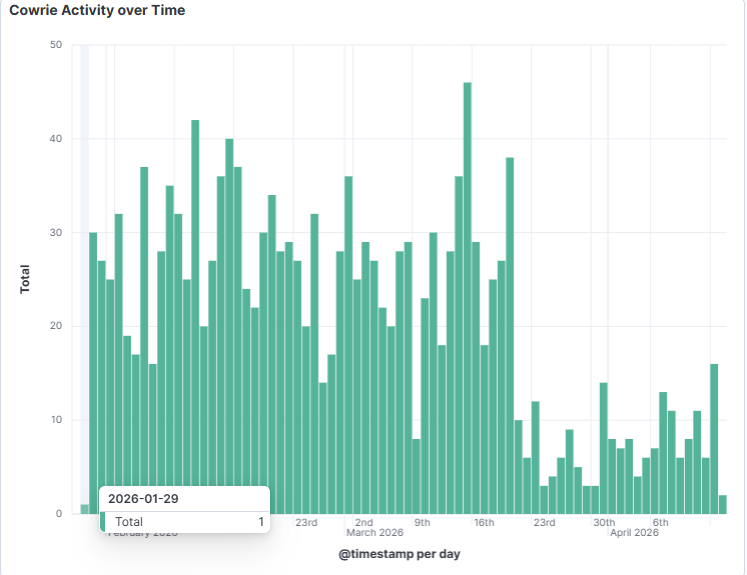
A single threat actor (IP 81.168.83.103) has been systematically scanning internet-facing systems since at least January 2026, specifically targeting credential files, API tokens, and configuration data associated with popular AI platforms including OpenAI, Anthropic Claude, HuggingFace, and the Openclaw/Clawdbot tools. The campaign focuses on harvesting AI API credentials and secrets stored in predictable file paths, representing a targeted reconnaissance effort against AI model deployments. If successful, these probes could enable API key theft, model access abuse, and broader compromise of AI-integrated systems.

Claude Source Code Leak Reveals AI Supply Chain Risk

Claude Source Code Leak Reveals AI Supply Chain Risk

ATLAS OWASP HIGH Significant risk · Prioritise patching ▲ 8.2 Dark Reading

A reported source code leak affecting Claude, Anthropic's large language model, underscores systemic weaknesses in AI software supply chains and the absence of robust oversight mechanisms at critical development and distribution layers. The incident highlights how proprietary model code, training pipelines, and system prompts can become high-value targets for adversarial actors seeking to enable model theft, backdoor insertion, or competitive intelligence gathering. This event serves as a broader warning about treating AI development infrastructure with the same rigor applied to other critical systems.

◉ AI THREAT BRIEFING

Stay ahead of the threat.

Twice-weekly digest of critical AI security developments — every story mapped to MITRE ATLAS and OWASP LLM Top 10. Free.

No spam. Unsubscribe anytime.