
LIVE FEED
Model Extraction Attacks Surge: Google GTIG Q4 Report

Model Extraction Attacks Surge: Google GTIG Q4 Report

ATLAS OWASP HIGH Significant risk · Prioritise patching ▲ 8.5 Mandiant Blog

Google Threat Intelligence Group's Q4 2025 AI Threat Tracker documents a meaningful escalation in adversarial AI misuse, including a surge in model extraction (distillation) attacks, nation-state operationalisation of LLMs for phishing and reconnaissance, and the emergence of AI-integrated malware families such as HONESTCUE that leverage Gemini's API. While no breakthrough capabilities have been observed from APT actors, the integration of agentic AI for tooling development signals a maturing threat landscape. Defenders should prioritise monitoring for model extraction activity, API abuse, and AI-augmented social engineering campaigns.
Scanning for AI Models, (Tue, Apr 14th)

Scanning for AI Models, (Tue, Apr 14th)

ATLAS OWASP HIGH Significant risk · Prioritise patching ▲ 7.8 SANS Internet Storm Center

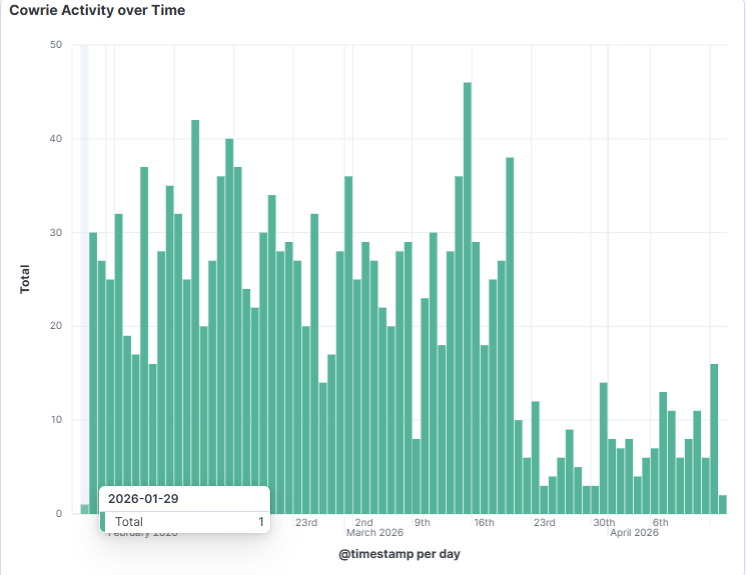
A single threat actor (IP 81.168.83.103) has been systematically scanning internet-facing systems since at least January 2026, specifically targeting credential files, API tokens, and configuration data associated with popular AI platforms including OpenAI, Anthropic Claude, HuggingFace, and the Openclaw/Clawdbot tools. The campaign focuses on harvesting AI API credentials and secrets stored in predictable file paths, representing a targeted reconnaissance effort against AI model deployments. If successful, these probes could enable API key theft, model access abuse, and broader compromise of AI-integrated systems.

Claude Source Code Leak Reveals AI Supply Chain Risk

Claude Source Code Leak Reveals AI Supply Chain Risk

ATLAS OWASP HIGH Significant risk · Prioritise patching ▲ 8.2 Dark Reading

A reported source code leak affecting Claude, Anthropic's large language model, underscores systemic weaknesses in AI software supply chains and the absence of robust oversight mechanisms at critical development and distribution layers. The incident highlights how proprietary model code, training pipelines, and system prompts can become high-value targets for adversarial actors seeking to enable model theft, backdoor insertion, or competitive intelligence gathering. This event serves as a broader warning about treating AI development infrastructure with the same rigor applied to other critical systems.

◉ AI THREAT BRIEFING

Stay ahead of the threat.

Twice-weekly digest of critical AI security developments — every story mapped to MITRE ATLAS and OWASP LLM Top 10. Free.

No spam. Unsubscribe anytime.