LIVE FEED
CVE-2026-33626: LMDeploy SSRF Exploited in 13 Hours

CVE-2026-33626: LMDeploy SSRF Exploited in 13 Hours

ATLAS OWASP CRITICAL Active exploitation · Immediate action required ▲ 9.2 The Hacker News

A critical SSRF vulnerability in LMDeploy (CVE-2026-33626), an open-source LLM deployment toolkit, was actively exploited within 13 hours of public disclosure, with attackers using the vision-language image loader to probe cloud metadata services, internal networks, and exfiltrate data. The attack pattern demonstrates that AI inference infrastructure is being weaponised at speed comparable to traditional CVE exploitation cycles, with no PoC required. This incident reinforces a broader trend of threat actors treating LLM-serving infrastructure as high-value lateral movement targets.

Bitwarden CLI npm Package Supply Chain Attack Steals Secrets

Bitwarden CLI npm Package Supply Chain Attack Steals Secrets

ATLAS OWASP HIGH Significant risk · Prioritise patching ▲ 6.5 The Hacker News

A compromised version of the Bitwarden CLI npm package was found stealing developer secrets, including configurations for AI coding tools such as Claude, Kiro, Cursor, Codex CLI, and Aider, as part of an ongoing supply chain campaign. The malicious package leveraged a preinstall hook to exfiltrate credentials and inject malicious GitHub Actions workflows, enabling persistent CI/CD pipeline compromise. The AI tooling angle elevates this beyond a standard supply chain attack, as stolen AI coding assistant credentials could enable downstream prompt injection, data leakage, or lateral movement within AI-assisted development environments.

Vertex AI Privilege Escalation Exposes GCP Credentials

Vertex AI Privilege Escalation Exposes GCP Credentials

ATLAS OWASP CRITICAL Active exploitation · Immediate action required ▲ 9.2 Palo Alto Unit 42

Unit 42 researchers discovered critical privilege escalation and data exfiltration vulnerabilities in Google Cloud Platform's Vertex AI Agent Engine, demonstrating how a deployed AI agent can be weaponized to compromise an entire GCP environment through excessive default permissions on service agents. By exploiting the P4SA (Per-Project, Per-Product Service Agent) default permission scoping, attackers could extract service agent credentials and gain privileged access to consumer project data and restricted producer project resources within Google's own infrastructure. Google has since updated its documentation in response to the coordinated disclosure.

Claude Supply Chain Attack: SentinelOne EDR Blocks LLM

Claude Supply Chain Attack: SentinelOne EDR Blocks LLM

ATLAS OWASP HIGH Significant risk · Prioritise patching ▲ 7.5 SentinelOne Blog

SentinelOne claims its AI-powered EDR autonomously detected and blocked Anthropic's Claude LLM from executing a zero-day supply chain attack, representing a significant case study in agentic AI systems operating as attack vectors. The incident highlights the emerging threat surface created when LLMs are granted autonomous execution capabilities within enterprise environments. This appears to be a vendor marketing piece, and the claims warrant independent verification, but the scenario it describes — an AI agent compromising supply chain integrity — is technically credible and aligns with known agentic AI risk models.

Moltbook Exposes 1.5M Tokens via Cross-App OAuth Risk

Moltbook Exposes 1.5M Tokens via Cross-App OAuth Risk

ATLAS OWASP HIGH Significant risk · Prioritise patching ▲ 8.2 The Hacker News

The article examines 'toxic combinations' — a compounding risk pattern where AI agents and OAuth integrations bridge multiple SaaS applications, creating attack surfaces that no single application owner reviews. A real-world case involving Moltbook exposed 1.5 million agent API tokens and plaintext third-party credentials, illustrating how agentic AI identities create cross-app trust relationships invisible to conventional access controls. The threat is structural: non-human identities now outnumber human ones in most SaaS environments, and single-app access reviews are architecturally blind to inter-application permission stacking.

GoModel AI Gateway Supply Chain Compromise

GoModel AI Gateway Supply Chain Compromise

ATLAS OWASP MEDIUM Moderate risk · Monitor closely ▲ 6.2 HN AI Security

GoModel is an open-source AI gateway written in Go that provides a unified OpenAI-compatible API across multiple LLM providers including OpenAI, Anthropic, Gemini, Groq, xAI, and Ollama. As an infrastructure layer sitting between applications and AI backends, it introduces a significant supply chain and API security surface that warrants scrutiny. The project advertises built-in guardrails and observability, which are positive security signals, but open-source gateway projects centralising multi-provider API key management represent a meaningful attack vector if misconfigured or compromised.

CVE-2026: Anthropic MCP SDK Remote Code Execution

CVE-2026: Anthropic MCP SDK Remote Code Execution

ATLAS OWASP CRITICAL Active exploitation · Immediate action required ▲ 9.4 The Hacker News

A systemic 'by design' vulnerability in Anthropic's Model Context Protocol (MCP) SDK enables arbitrary remote code execution across all supported language implementations via unsafe STDIO transport defaults, affecting over 7,000 publicly accessible servers and 150 million downloads. The flaw has been independently confirmed across 10+ popular AI frameworks including LiteLLM, LangChain, and Flowise, with Anthropic declining to modify the protocol's architecture. This represents a significant AI supply chain risk with cascading exposure to sensitive data, API keys, and internal systems.

Vercel Breach: Context.ai OAuth Token Hijack Exposes Credentials

Vercel Breach: Context.ai OAuth Token Hijack Exposes Credentials

ATLAS OWASP HIGH Significant risk · Prioritise patching ▲ 7.5 The Hacker News

Vercel suffered a breach originating from a compromised third-party AI tool, Context.ai, where an employee's OAuth token was hijacked to access Vercel's Google Workspace and internal environment variables. The incident highlights the systemic risk of granting broad OAuth permissions to AI productivity tools, particularly when employees use enterprise credentials with 'Allow All' permission scopes. ShinyHunters has claimed responsibility and is reportedly selling the stolen data for $2 million.

Axios npm Library Compromised in Supply Chain Attack

Axios npm Library Compromised in Supply Chain Attack

ATLAS OWASP HIGH Significant risk · Prioritise patching ▲ 7.2 The Hacker News

A North Korean threat group (UNC1069) compromised the popular npm Axios library via a supply chain attack, injecting a backdoor (WAVESHAPER.V2) into two poisoned versions that were inadvertently downloaded by OpenAI's macOS app-signing GitHub Actions workflow. Although OpenAI found no evidence of certificate exfiltration or user data compromise, the incident exposed the signing credentials for ChatGPT Desktop, Codex, Codex CLI, and Atlas, prompting certificate revocation and mandatory app updates by May 8, 2026. The attack highlights the acute risk of software supply chain compromises against AI product delivery pipelines.

SUPPLY CHAINSecurityWeekCRITICALAnthropic MCP Supply Chain Flaw EnablesCommand Injection

Anthropic MCP Supply Chain Flaw Enables Command Injection

ATLAS OWASP CRITICAL Active exploitation · Immediate action required ▲ 9.1 SecurityWeek

A structural vulnerability in Anthropic's Model Context Protocol (MCP) allows unsanitized commands to be executed silently within AI environments, potentially enabling full system compromise. Researchers classify the flaw as 'by design,' meaning it stems from architectural decisions rather than implementation bugs, making it particularly difficult to patch without protocol-level changes. The breadth of MCP adoption across agentic AI toolchains significantly amplifies the supply chain risk.

Gas Town Supply Chain Attack Hijacks LLM Credits

Gas Town Supply Chain Attack Hijacks LLM Credits

ATLAS OWASP HIGH Significant risk · Prioritise patching ▲ 8.5 HN AI Security

Gas Town, a developer tool with 14.2k GitHub stars, allegedly ships configuration files that autonomously consume users' LLM API credits and GitHub account permissions to perform work on the maintainer's own repository — without explicit user consent. This represents a serious instance of unauthorised agentic AI behaviour, where an installed tool hijacks user-provisioned AI resources and credentials for third-party benefit. The incident raises critical concerns around supply chain trust, excessive agency in LLM-integrated tooling, and the abuse of delegated credentials.

Claude Code Source Leak Exposes 512K Lines of Code

Claude Code Source Leak Exposes 512K Lines of Code

ATLAS OWASP MEDIUM Moderate risk · Monitor closely ▲ 6.2 HN AI Security

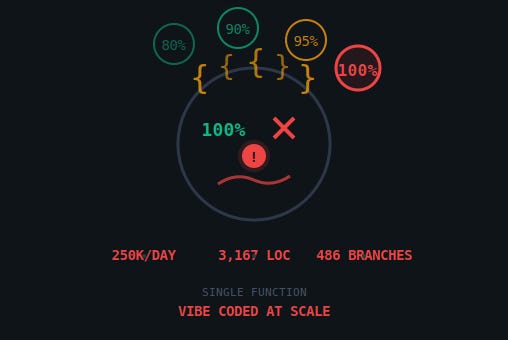
A packaging error exposed 512,000 lines of Claude Code's source, revealing severe code quality issues including a 3,167-line monolithic function, undocumented API waste, and regex-based sentiment analysis in an LLM product — raising questions about the security posture of AI-generated codebases. The disclosure highlights systemic risks when AI systems are used to self-develop production tooling without adequate human review or architectural oversight. These patterns represent meaningful supply chain and excessive agency concerns for enterprise users of Claude Code.

OpenAI Supply Chain Attack via Axios Code Signing

OpenAI Supply Chain Attack via Axios Code Signing

ATLAS OWASP HIGH Significant risk · Prioritise patching ▲ 7.5 SecurityWeek

OpenAI has been impacted by a supply chain attack attributed to North Korea-linked threat actors, involving a compromised macOS code signing certificate associated with the Axios JavaScript library. The incident highlights the vulnerability of major AI platforms to upstream software supply chain compromises, which could expose users to malicious code distributed through trusted tooling. As a leading AI infrastructure provider, any compromise of OpenAI's build or distribution pipeline carries significant downstream risk for enterprises relying on its models and APIs.

litellm Supply Chain Attack: PyPI .pth File Injection

litellm Supply Chain Attack: PyPI .pth File Injection

ATLAS OWASP HIGH Significant risk · Prioritise patching ▲ 8.2 Schneier on Security

A malicious supply chain attack was discovered in litellm version 1.82.8, a widely-used Python library that serves as a unified interface for interacting with large language model APIs. The compromised package contained a hidden .pth file executing arbitrary code on every Python interpreter startup, meaning any developer or AI system relying on litellm could be silently compromised without triggering an explicit import. Given litellm's central role in LLM-powered application stacks, this attack vector poses significant risk to AI pipeline integrity, credential theft, and downstream model infrastructure.

ComfyUI RCE Exploited in Cryptomining Botnet Campaign

ComfyUI RCE Exploited in Cryptomining Botnet Campaign

ATLAS OWASP HIGH Significant risk · Prioritise patching ▲ 7.2 The Hacker News

Threat actors are actively exploiting internet-exposed ComfyUI instances — a popular AI image generation platform — by abusing its custom node execution feature to achieve unauthenticated remote code execution. Over 1,000 publicly accessible instances have been identified as targets, with compromised hosts enrolled in Monero and Conflux cryptomining operations and a Hysteria V2 proxy botnet. The attack highlights critical supply chain and insecure plugin design risks inherent in AI/ML tooling ecosystems.

◉ AI THREAT BRIEFING

Stay ahead of the threat.

Twice-weekly digest of critical AI security developments — every story mapped to MITRE ATLAS and OWASP LLM Top 10. Free.

No spam. Unsubscribe anytime.