LIVE FEED
Claude Sandbox Escape Enables Credential Exfiltration

Claude Sandbox Escape Enables Credential Exfiltration

ATLAS OWASP MEDIUM Moderate risk · Monitor closely ▲ 7.2 Simon Willison

Anthropic has published detailed documentation of its sandboxing architecture across Claude.ai, Claude Code, and Claude Cowork, including disclosure of a previously identified credential exfiltration vector via the api.anthropic.com/v1/files endpoint. The writeup covers process-level isolation technologies including gVisor, Seatbelt, Bubblewrap, and full VM approaches, and candidly acknowledges security gaps that were missed. This transparency is notable for the agentic AI space, where sandbox documentation is typically sparse and trust is difficult to calibrate.

Excessive Agency in AI Agents: Tool Access Control Gaps

Excessive Agency in AI Agents: Tool Access Control Gaps

ATLAS OWASP LOW Limited impact · Standard review ▲ 6.2 HN AI Security

Statewright is an open-source framework that enforces state machine constraints on AI agents, restricting which tools agents can invoke during each phase of a workflow. The project directly addresses the Excessive Agency problem, where AI agents operating with broad, unconstrained tool access can take unintended or harmful actions. While a defensive development rather than a threat disclosure, it signals growing practitioner awareness of agentic AI risk and offers a concrete mitigation pattern for teams deploying coding agents like Claude Code, Codex, or Cursor.

CVE-2026-45321: Supply Chain Worm Targets Mistral AI

CVE-2026-45321: Supply Chain Worm Targets Mistral AI

ATLAS OWASP CRITICAL Active exploitation · Immediate action required ▲ 9.2 The Hacker News

The TeamPCP threat actor has executed a broad supply chain campaign dubbed Mini Shai-Hulud, injecting credential-stealing malware into npm and PyPI packages from major AI and developer tooling ecosystems including Mistral AI, Guardrails AI, and TanStack. The malware profiles execution environments, exfiltrates cloud, CI, and AI tool credentials, and establishes persistence inside Claude Code and VS Code IDEs. The TanStack compromise alone affected 42 packages and 84 versions, exploiting a chained GitHub Actions attack to inject malicious payloads without stealing npm tokens directly.

TrustFall: Repository Poisoning RCE in AI Coding Tools

TrustFall: Repository Poisoning RCE in AI Coding Tools

ATLAS OWASP HIGH Significant risk · Prioritise patching ▲ 8.5 Dark Reading

A vulnerability class dubbed 'TrustFall' demonstrates that malicious code repositories can trigger arbitrary code execution in AI-assisted developer tools including Claude Code, Cursor CLI, Gemini CLI, and GitHub Copilot CLI, with little to no user interaction required. The attack surface stems from inadequate or easily dismissed warning dialogs that fail to surface the risk of executing untrusted repository content. Developers cloning or opening adversarial repositories are exposed to full host-level compromise through the elevated trust these AI coding agents place in repository-supplied context.

Claude Code OAuth Token Theft via npm Supply Chain

Claude Code OAuth Token Theft via npm Supply Chain

ATLAS OWASP HIGH Significant risk · Prioritise patching ▲ 9.1 SecurityWeek

Mitiga Labs has disclosed a stealthy attack chain targeting Claude Code's MCP infrastructure, allowing adversaries to silently intercept OAuth tokens by redirecting MCP traffic through attacker-controlled infrastructure. The attack requires only the ability to install a malicious npm package, which modifies ~/.claude.json to insert a proxy and pre-sets trust flags to suppress security prompts. Because the OAuth token grants broad access to all connected SaaS tools, successful exploitation effectively hands attackers a persistent master key to the victim's integrated development environment.

Loopsy AI Agent Relay Enables Cross-Machine RCE

Loopsy AI Agent Relay Enables Cross-Machine RCE

ATLAS OWASP MEDIUM Moderate risk · Monitor closely ▲ 6.5 HN AI Security

Loopsy is an open-source tool enabling cross-machine communication between AI coding agents (Claude Code, Cursor, Codex) and mobile devices via a self-hosted Cloudflare Workers relay. While designed for legitimate developer productivity, the architecture introduces significant attack surface: a relay brokering shell access and AI agent commands across machines is a high-value target for interception, hijacking, or supply chain compromise. Security teams should assess exposure before deploying such tools in sensitive development environments.

Comment Injection Attacks Hit Claude Code, Gemini, Copilot

Comment Injection Attacks Hit Claude Code, Gemini, Copilot

ATLAS OWASP HIGH Significant risk · Prioritise patching ▲ 8.2 SecurityWeek

A researcher has disclosed a novel prompt injection attack technique dubbed 'Comment and Control,' demonstrating that popular AI coding agents — including Claude Code, Gemini CLI, and GitHub Copilot Agents — can be manipulated through malicious instructions embedded in source code comments. The attack exploits the tendency of agentic coding tools to process and act upon contextual content within files they are tasked to read or modify. This represents a meaningful escalation in the risk surface of AI-assisted software development workflows.

Claude Code Source Leak Exposes 512K Lines of Code

Claude Code Source Leak Exposes 512K Lines of Code

ATLAS OWASP MEDIUM Moderate risk · Monitor closely ▲ 6.2 HN AI Security

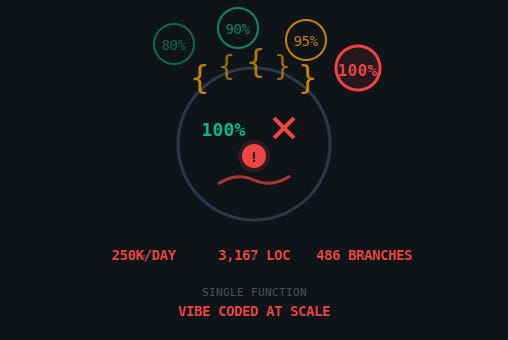
A packaging error exposed 512,000 lines of Claude Code's source, revealing severe code quality issues including a 3,167-line monolithic function, undocumented API waste, and regex-based sentiment analysis in an LLM product — raising questions about the security posture of AI-generated codebases. The disclosure highlights systemic risks when AI systems are used to self-develop production tooling without adequate human review or architectural oversight. These patterns represent meaningful supply chain and excessive agency concerns for enterprise users of Claude Code.

◉ AI THREAT BRIEFING

Stay ahead of the threat.

Twice-weekly digest of critical AI security developments — every story mapped to MITRE ATLAS and OWASP LLM Top 10. Free.

No spam. Unsubscribe anytime.