LIVE FEED
FIRST LOOK Yellow Teams Bring AI Offense and Defense Into One Security Function // FIRST LOOK Tracebit Ships AWS Context Bombing Defence Against AI Hacking Agents // FIRST LOOK FriendMachine Launches Jacquard Lang for AI-Written Code Review // CRITICAL Check Point 2026 AI Security Report: LLMs Now Run Live Attacks // FIRST LOOK OpenAI GPT-5.6 Sol Ships Faster Parallel Tool-Use for Agents // FIRST LOOK Meta Launches Muse Image with Public Instagram Photo Reuse // FIRST LOOK Estonia Launches State-Issued Digital IDs for AI Agents // HIGH AI Widens Skill-Ability Gap, Enabling Autonomous Cyberattacks // FIRST LOOK OpenAI Expands ChatGPT Into Family and Caregiver Households // FIRST LOOK Iroh Launches Mesh LLM for Distributed AI Across Peer Nodes //
AGENTIC AIThe Hacker NewsCRITICALCVE-2025-3248: Langflow RCE Enables AutonomousRansomware Attack

CVE-2025-3248: Langflow RCE Enables Autonomous Ransomware Attack

ATLAS OWASP CRITICAL Active exploitation · Immediate action required ▲ 9.8 The Hacker News

Sysdig has documented what it claims is the first end-to-end ransomware attack orchestrated autonomously by an AI agent, attributed to a threat actor tracked as JADEPUFFER. The agent exploited a known remote code execution flaw in Langflow (CVE-2025-3248) to gain initial access, harvest credentials, pivot laterally, and ultimately encrypt and destroy a production database — all without human intervention at the keyboard. The incident demonstrates that AI agents can now lower the skill floor for complex, multi-stage attacks to near zero, representing a qualitative shift in the ransomware threat landscape.

Google Gemini Prompt Injection Powers Smishing Campaign

Google Gemini Prompt Injection Powers Smishing Campaign

ATLAS OWASP HIGH Significant risk · Prioritise patching ▲ 8.2 The Hacker News

Google has filed suit against a Chinese cybercrime network operating the Outsider phishing-as-a-service kit, which exploited Gemini AI to generate fraudulent phishing pages and power large-scale SMS phishing attacks against Americans. The network used carefully framed prompts — disguised as benign programming requests — to bypass AI safety controls and produce functional credential-harvesting websites. The case illustrates the growing industrialisation of AI-assisted phishing infrastructure, with over 1.59 million malicious URLs and 100,000 victims attributed to the operation.

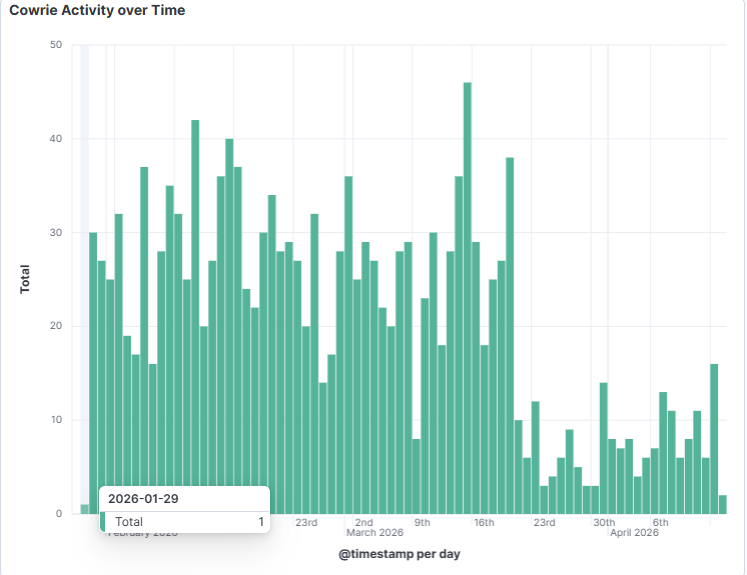
Scanning for AI Models, (Tue, Apr 14th)

Scanning for AI Models, (Tue, Apr 14th)

ATLAS OWASP HIGH Significant risk · Prioritise patching ▲ 7.8 SANS Internet Storm Center

A single threat actor (IP 81.168.83.103) has been systematically scanning internet-facing systems since at least January 2026, specifically targeting credential files, API tokens, and configuration data associated with popular AI platforms including OpenAI, Anthropic Claude, HuggingFace, and the Openclaw/Clawdbot tools. The campaign focuses on harvesting AI API credentials and secrets stored in predictable file paths, representing a targeted reconnaissance effort against AI model deployments. If successful, these probes could enable API key theft, model access abuse, and broader compromise of AI-integrated systems.

◉ AI THREAT BRIEFING

Stay ahead of the threat.

Twice-weekly digest of critical AI security developments — every story mapped to MITRE ATLAS and OWASP LLM Top 10. Free.

No spam. Unsubscribe anytime.